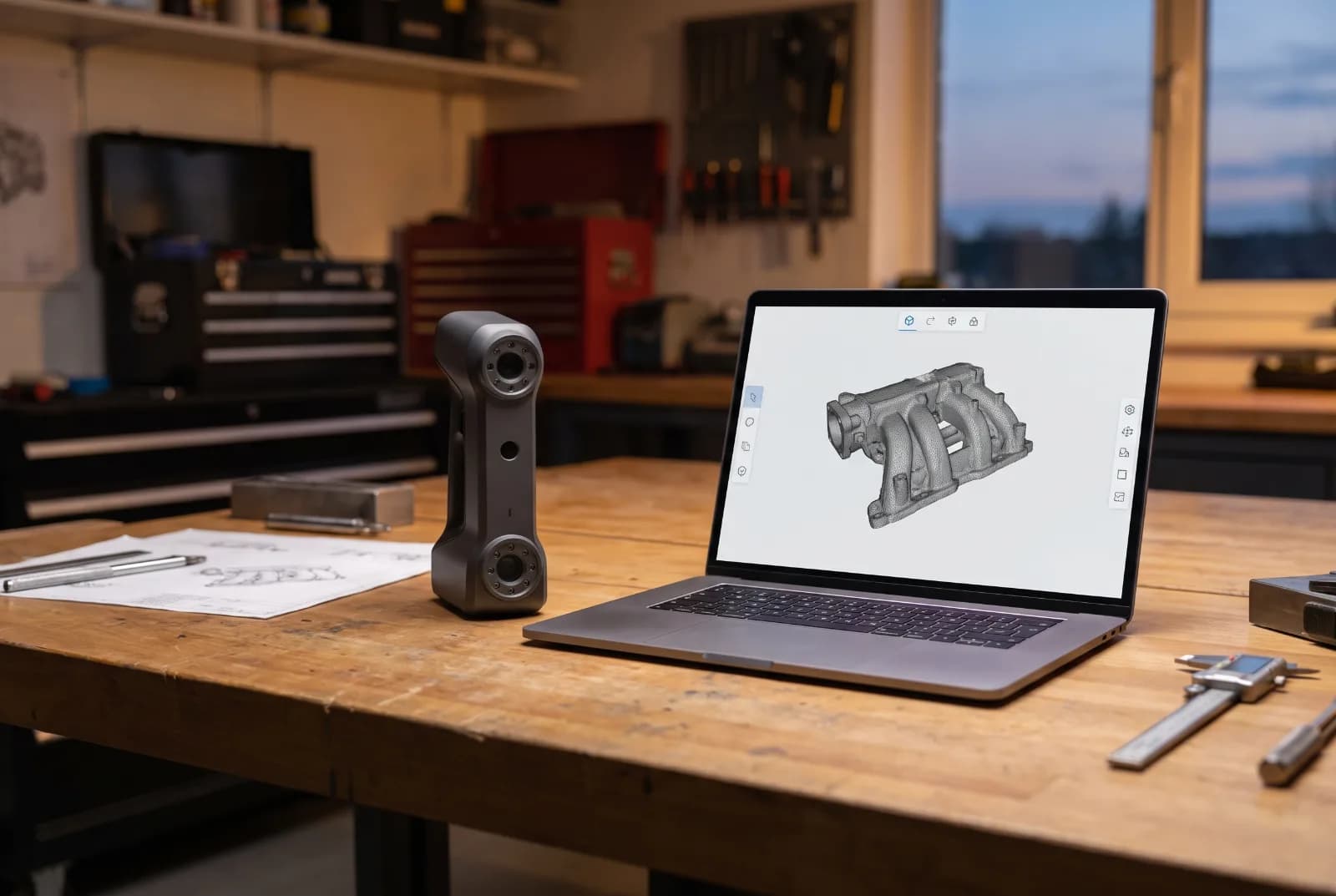
Mesh (STL, OBJ)
Our pick for you- Best for
- Sculptures, organic shapes, and printing a copy as it is
- Surface
- Every detail and texture, as scanned
- Editing
- Sculpting and mesh tools; dimensions are hard to change
- Choose it when
- You want a faithful copy
London studio · On-site scanning across the UK
Accurate 3D scans of small and medium objects, from car parts to sculptures, turned into clean, measurable 3D models that are ready to modify, reproduce or print.
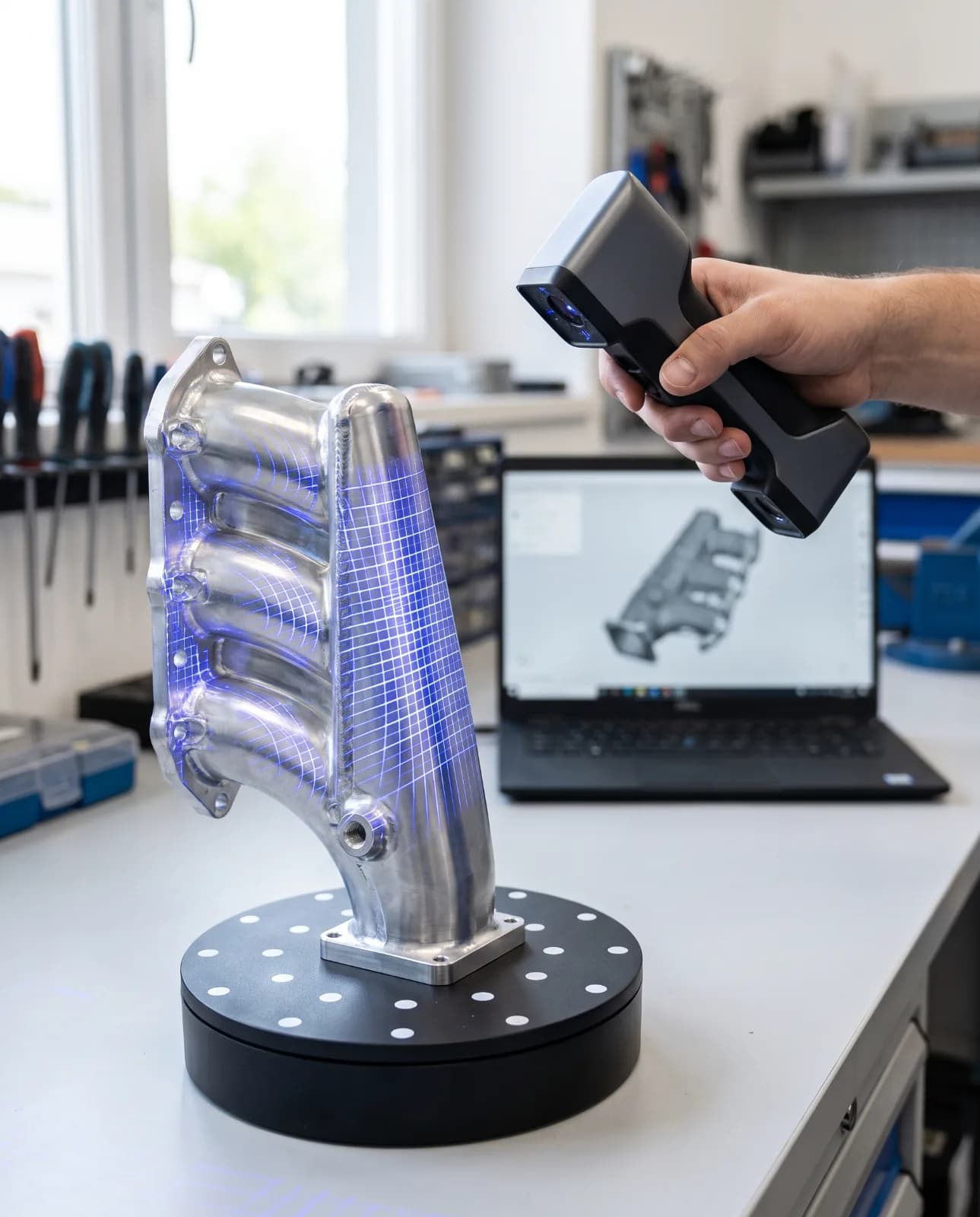 Checked against the original
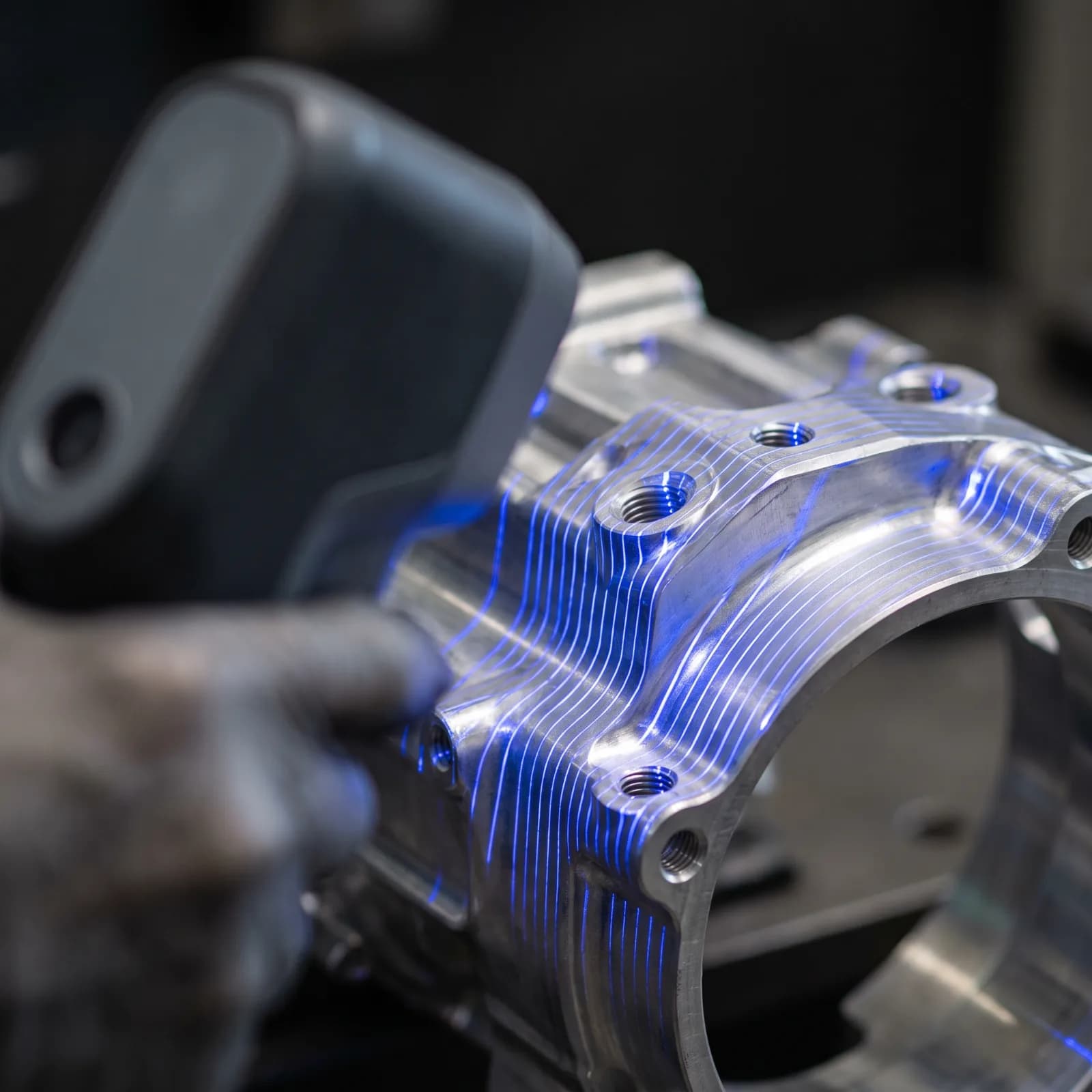
Made around your project
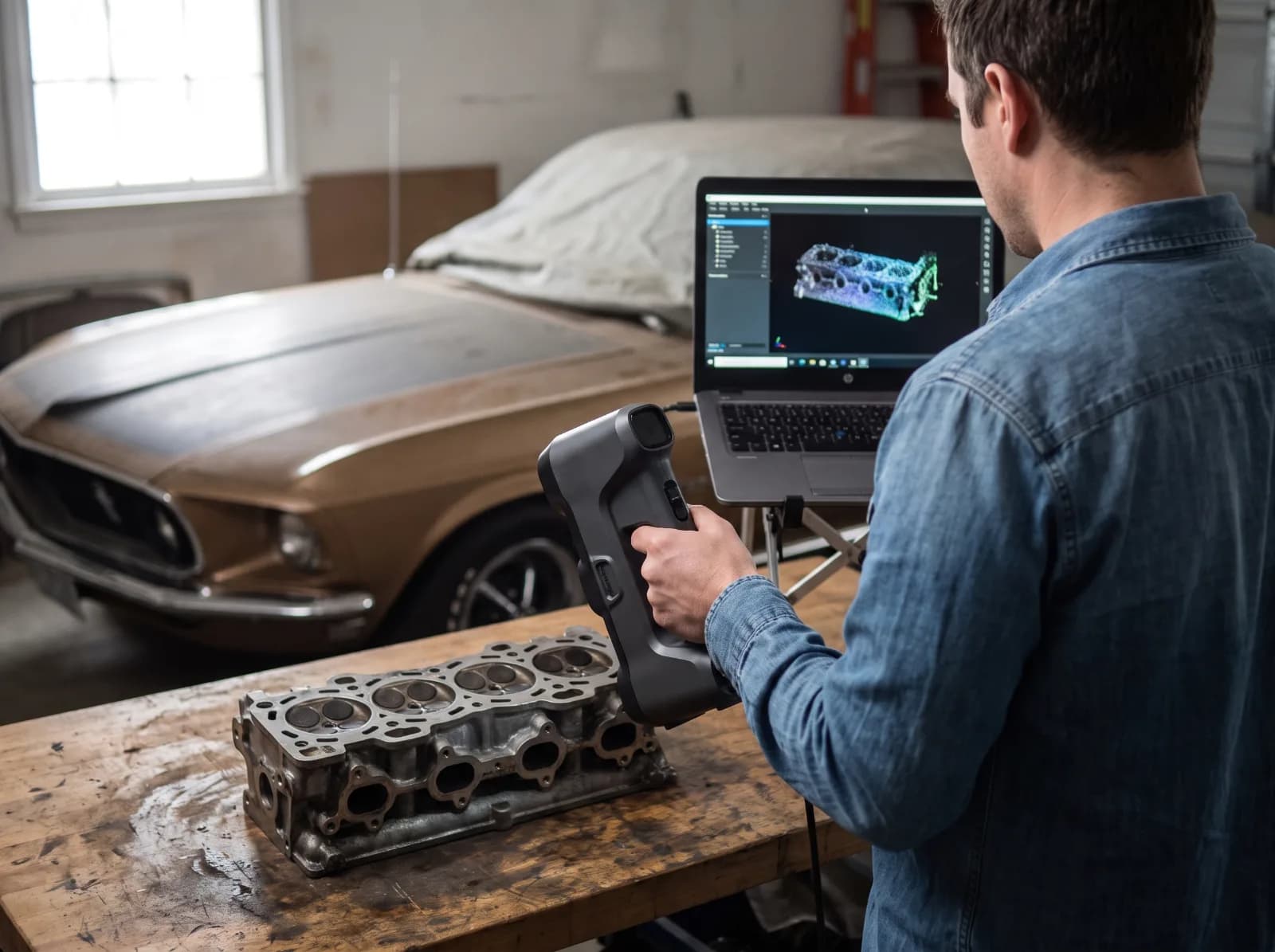
Stranger Hands turns physical objects into accurate 3D data, in the London studio or at your location. We scan small and medium objects, from a classic-car part or a broken bracket to a sculpture or a hand-made prototype, then check the scan against the original. A raw scan is a mesh of millions of points, so most jobs continue into 3D modelling: the scan is cleaned and repaired, and a part that has to fit is rebuilt as editable CAD, ready to modify, archive, or print on our FDM and resin printers. Tell us the object, what the scan is for and the accuracy it needs, and we will quote the scanning, modelling and printing together. We travel to scan across London and to other UK cities.
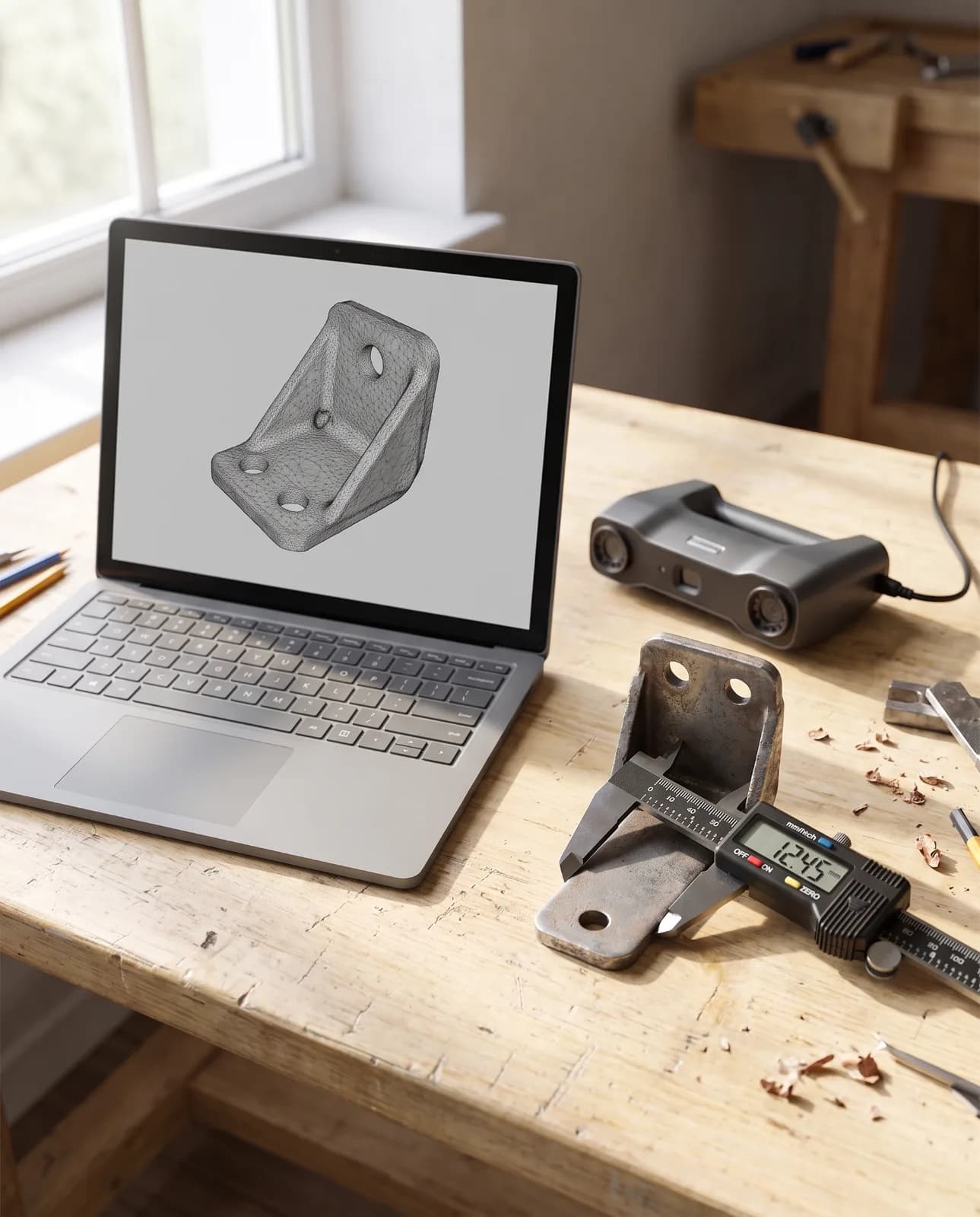 Measured, then compared
What we can help with
The tolerance the job needs is agreed before we scan. Key dimensions are measured on the original and checked against the model before the files are sent, so you know the scan will fit.
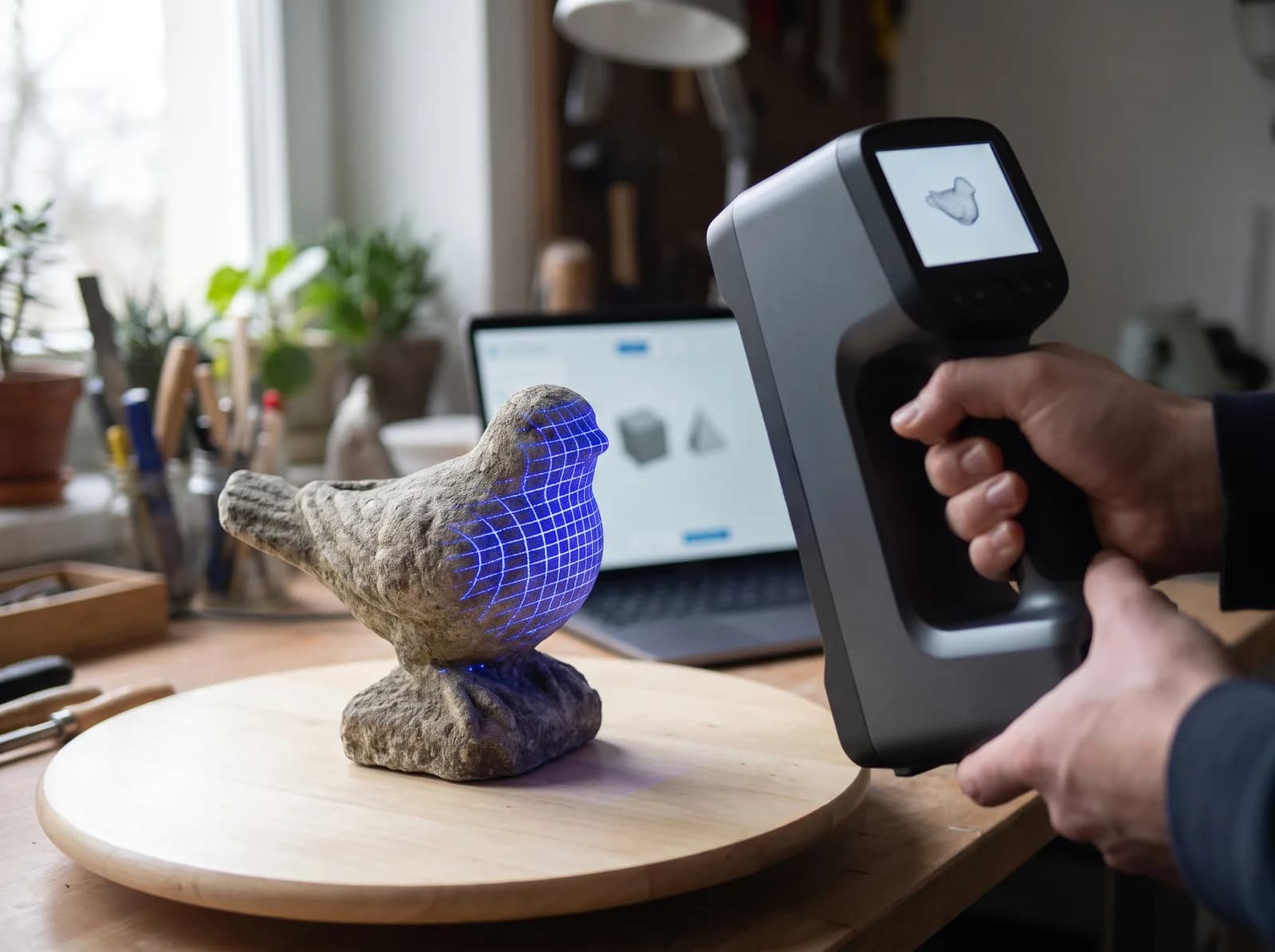
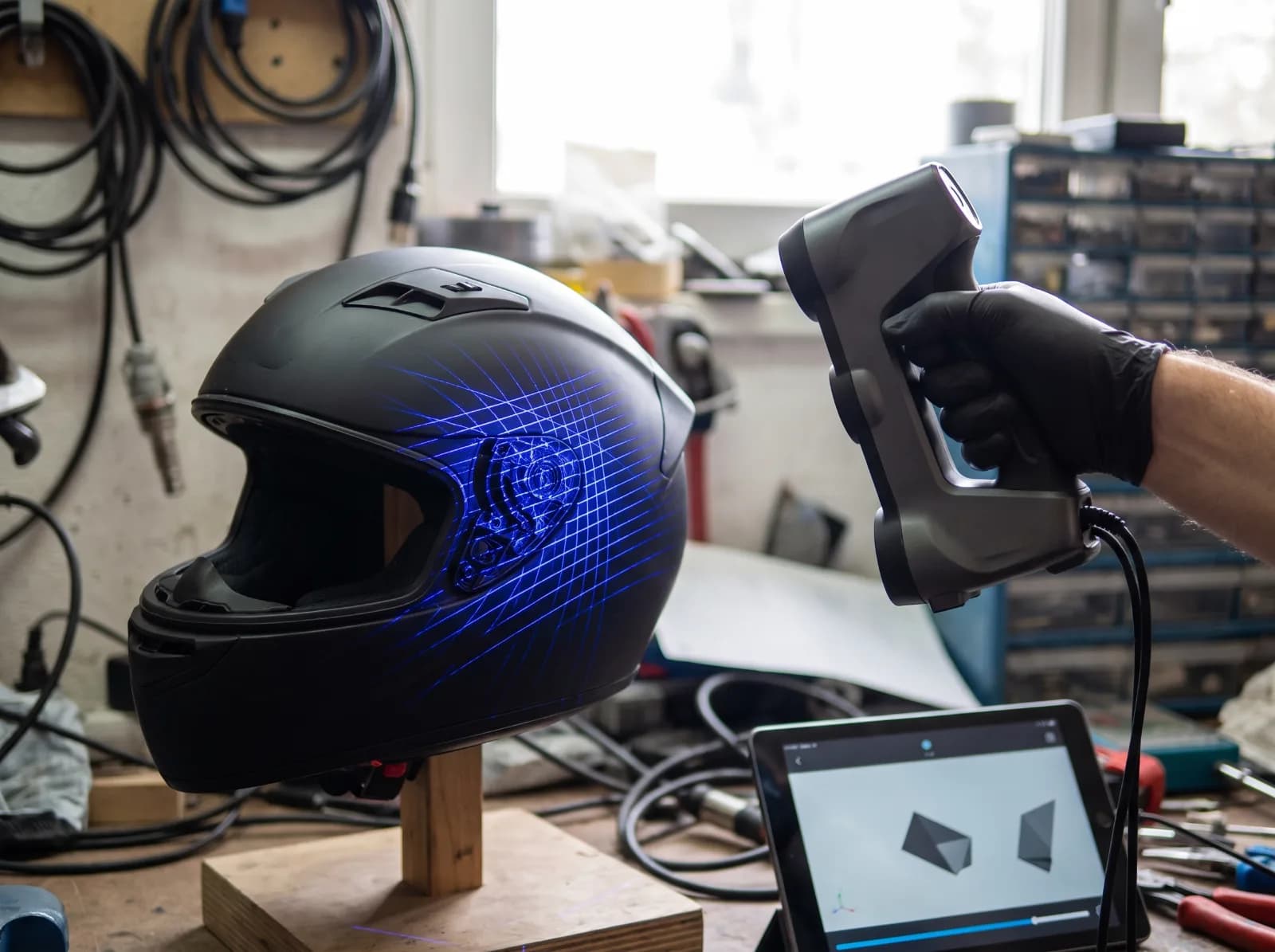
From a clip, knob or badge you hold between two fingers to a cylinder head, a helmet or a sculpture: car and motorbike parts, brackets, housings, figurines, props and prototypes.
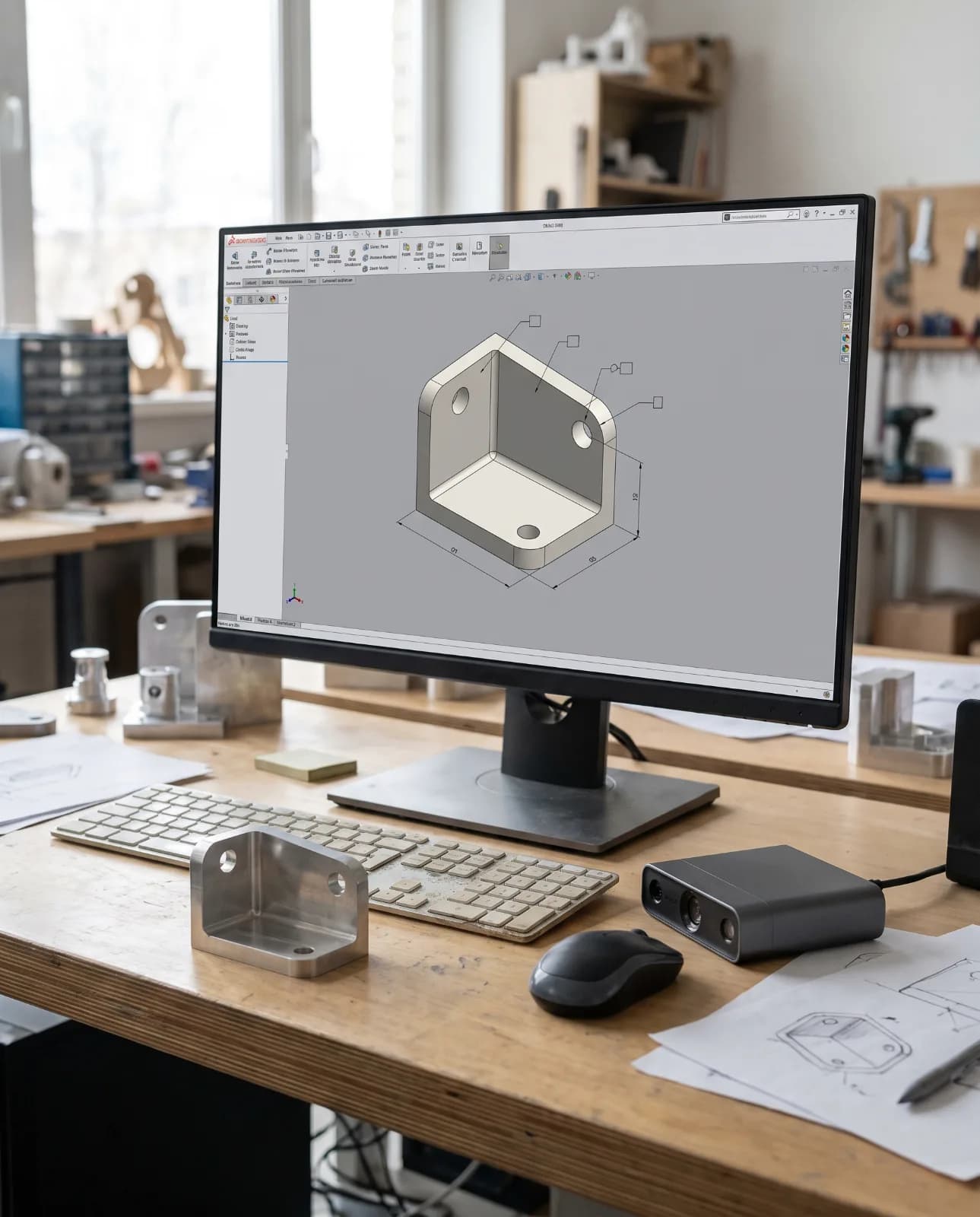
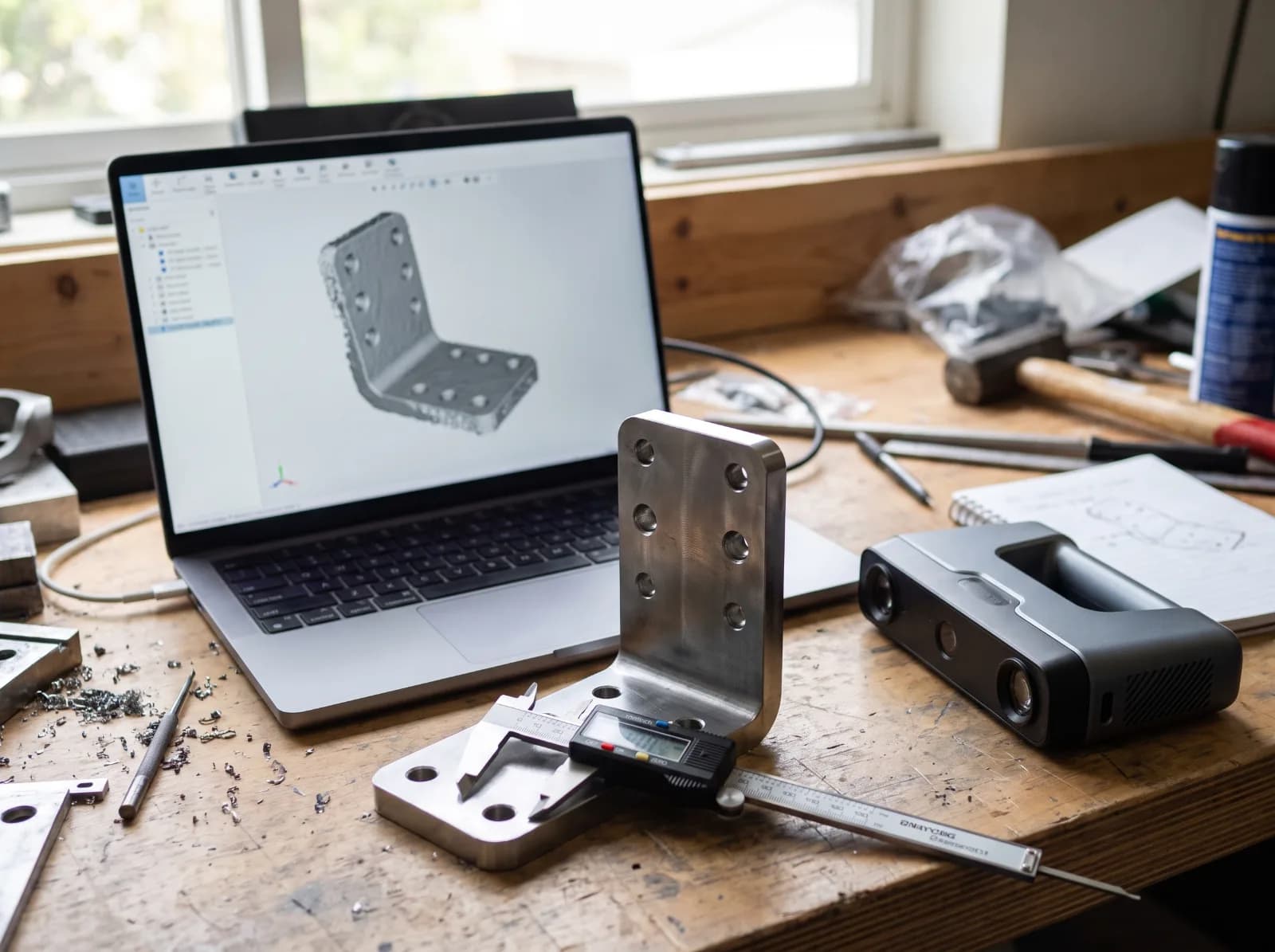
A raw scan is a mesh. We clean and repair it, fill the gaps, and where a part has to fit something, rebuild it as solid CAD with true flat faces, holes and edges you can edit.
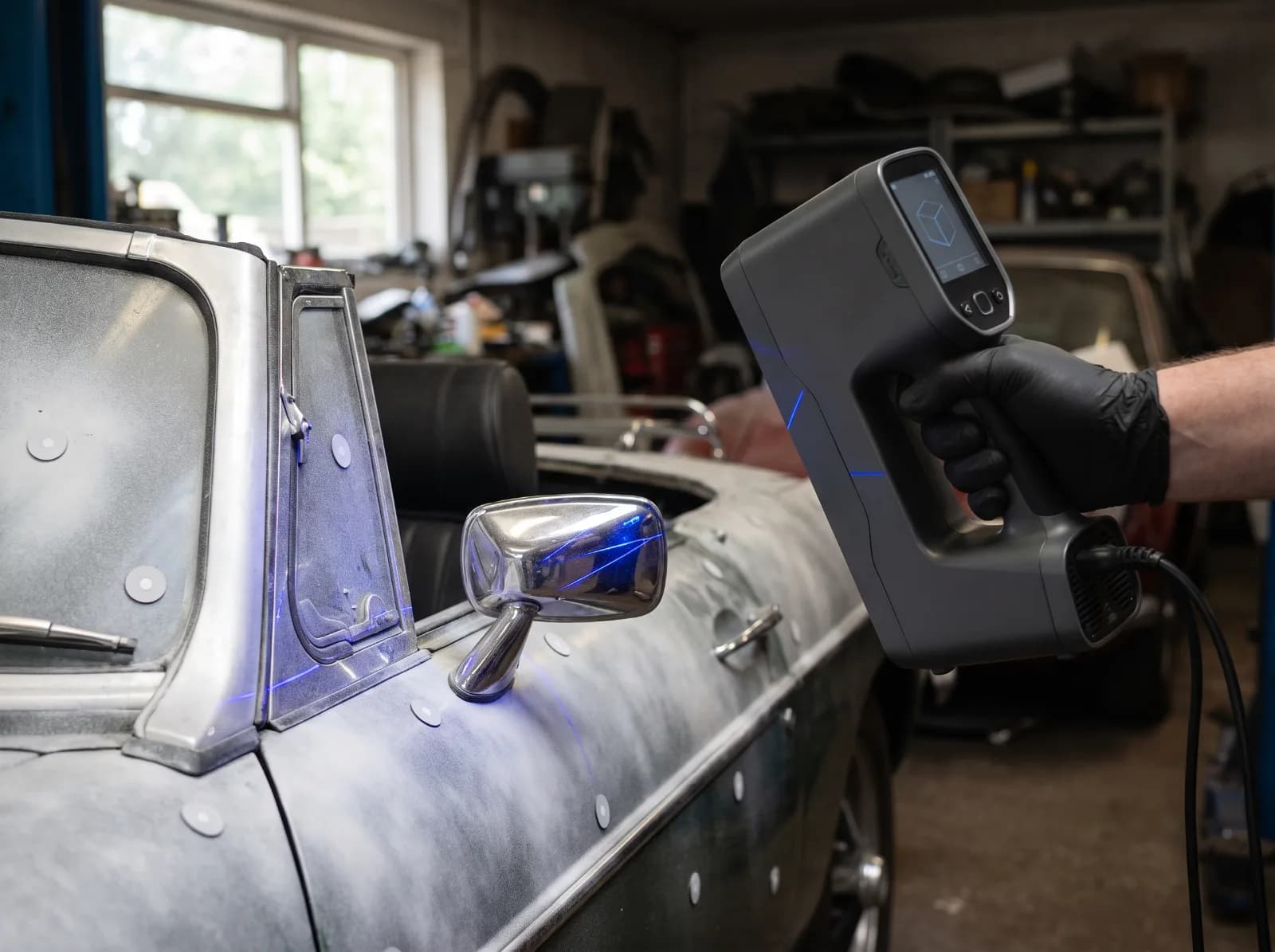
Chrome, gloss black and transparent parts are hard to scan. A temporary scanning spray or small markers solve most of them, always agreed with you before anything touches the object.
When the object cannot travel (a car, a machine, an installation), we bring the scanner to your garage, workshop or site across London, and to other UK cities by arrangement.
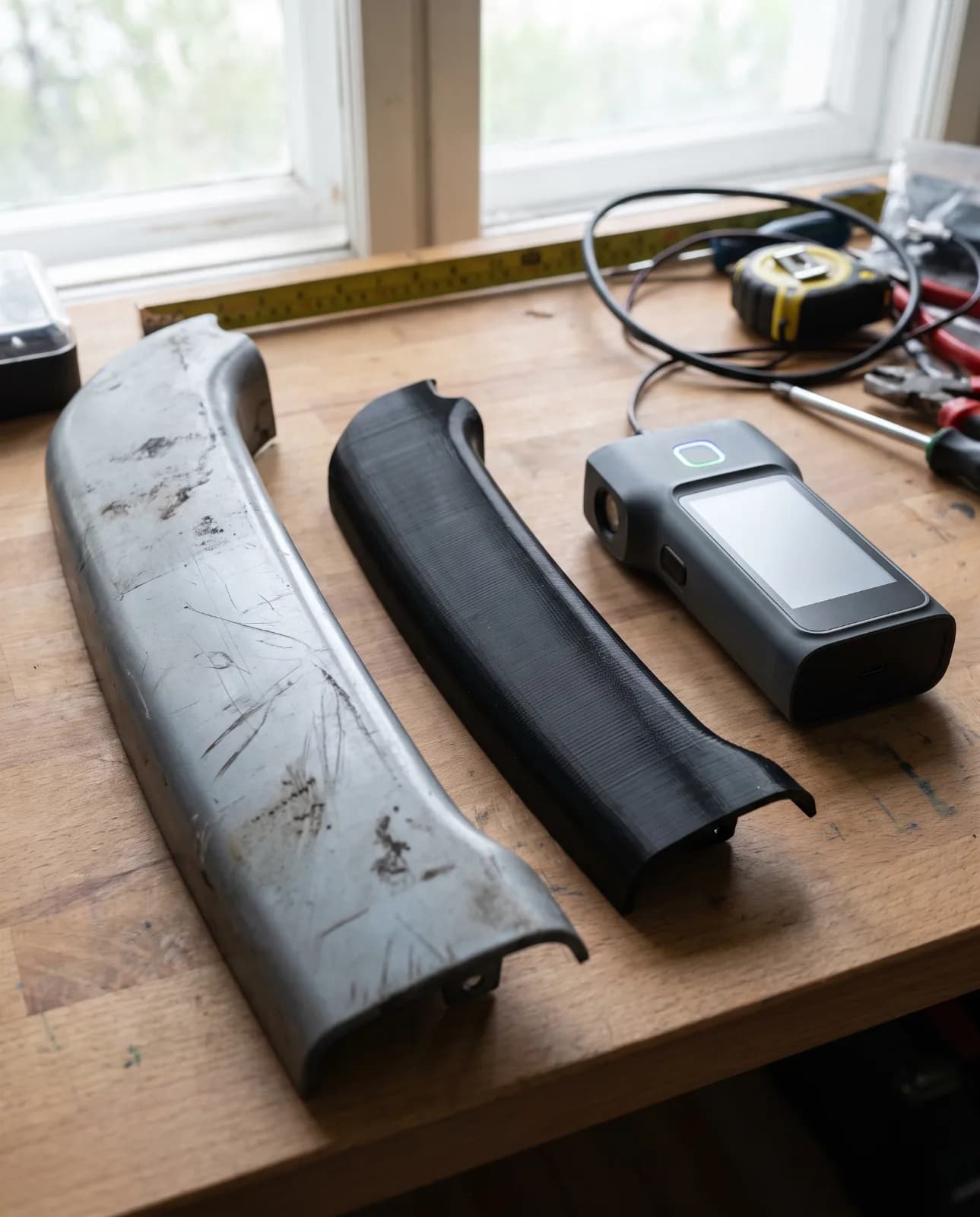
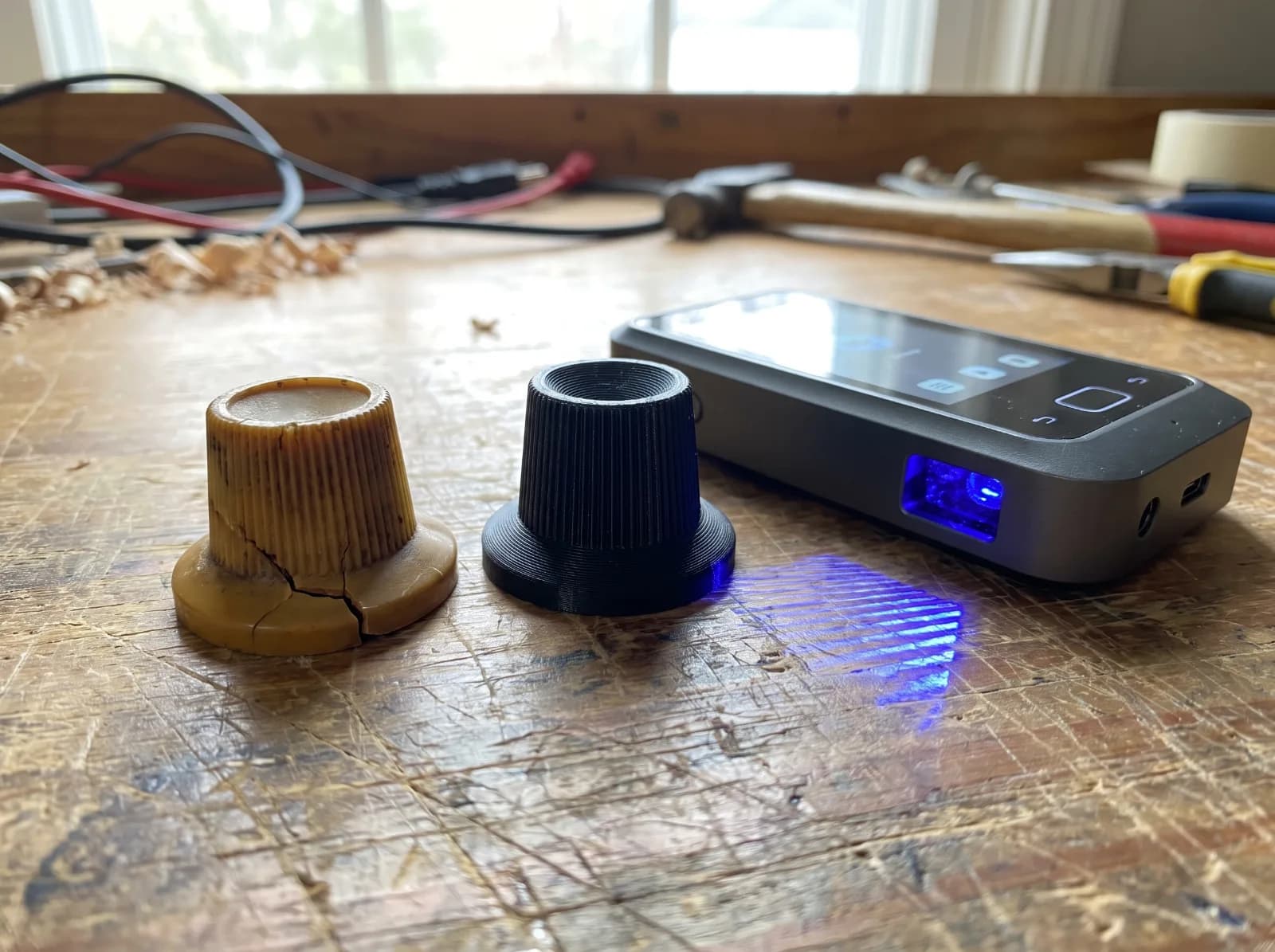
A scan can become a copy, a repaired part or an improved one, printed in FDM for tough, functional parts or in resin for fine surface detail.
From object to part
A scan is the start. Most projects need the model cleaned up or rebuilt, and many end with a printed part. Take it as far as your project needs.
 1
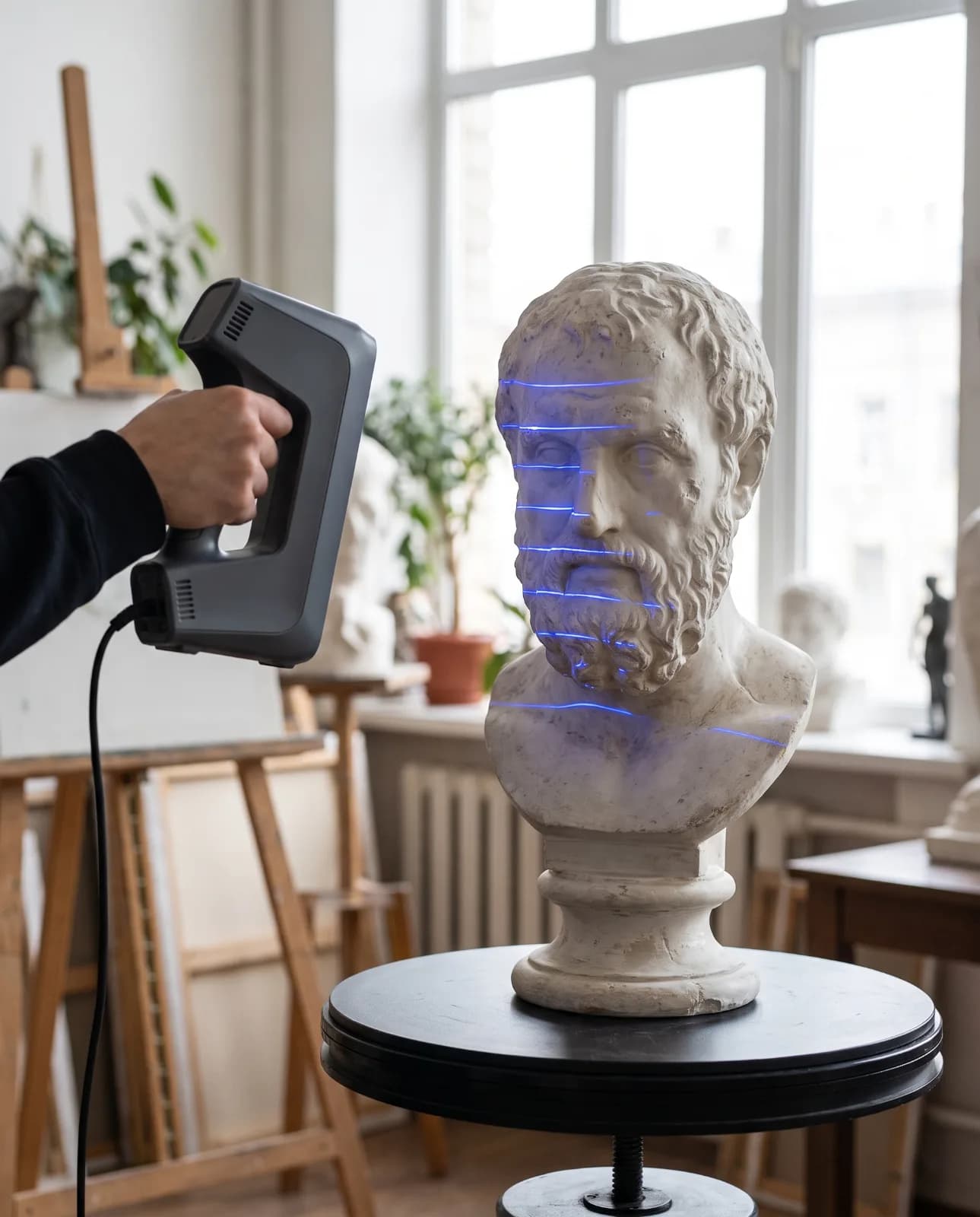
Captured from every side, in the studio or at your location, and checked before we pack up.
 2
Cleaned, repaired, and rebuilt as editable CAD where the part has to fit.
 3
Reproduced in FDM for tough parts, or in resin for fine detail.
Explore 3D printing ↗What can be scanned
From object to file
Send photos, rough dimensions, the material and finish, what the scan is for and the accuracy you need.
Bring or post the object to the London studio, or we come to you. It is scanned from every side, and the capture is checked before we pack up.
The scan is cleaned and repaired, rebuilt as CAD where the part must fit, and checked against the original's measurements.
You receive the files (STL, OBJ, PLY or STEP), or we print the part for you in FDM or resin.
Mesh or CAD?
Every scan starts as a mesh. Whether it stays one depends on what happens next. Tell us what the scan is for, and we will recommend the right output.
A few useful answers
It depends on the object's size, shape and surface, and on what the scan is for. Tell us the tolerance you need: we confirm what is achievable for your object before quoting, and check key dimensions against the original before the files are sent.
Small and medium objects: from clips, knobs and figurines to car parts, helmets and sculptures. For anything larger, send photos and dimensions and we will tell you whether and how it can be scanned.
Yes. Brackets, trim, housings, knobs, badges, mirror housings, intake and engine parts, and classic-car or motorbike parts that are no longer made. Clean off grease and dirt first. A part can be scanned in the studio, or on the car at your garage.
Yes. We come to homes, garages, workshops and businesses across London, and to other UK cities by arrangement. Travel is quoted with the job, so tell us where the object is.
Mesh files such as STL, OBJ or PLY, and STEP when the part is rebuilt as CAD. Tell us the software you use and we will supply a format it opens.
Usually, yes, with a temporary scanning spray or small markers that are removed afterwards. Anything applied to the object is agreed with you first.
Yes. FDM suits tough, functional parts and larger pieces; resin suits fine detail. We can print a copy as scanned, a repaired version, or a modified one, such as a part made stronger or scaled to a new size.
It depends on the object's size and complexity, the accuracy and modelling it needs, and whether we travel. Send photos and details for a quote that covers scanning, modelling and any printing.
Tell us the essentials
Send photos of the object, its rough dimensions, what the scan is for, the accuracy you need, whether you need CAD, printing or both, and where the object is.
We use a few cookies to keep the site working, and would like to set optional ones too, only if you agree. The optional ones send information to Google, to measure which adverts lead to an order. Read the cookie policy.